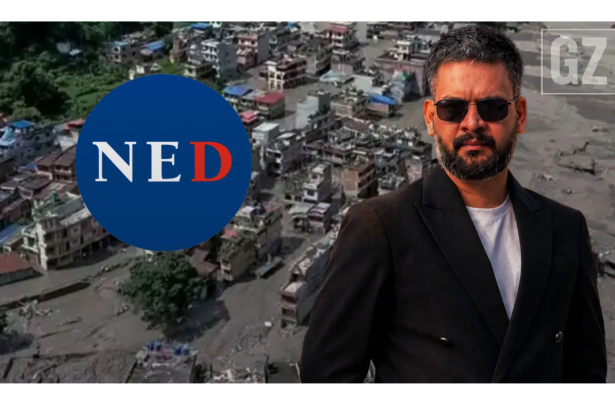
Nepal’s New Leadership Faces Scrutiny Over Disaster Response and Alleged Foreign Political Links
KATHMANDU, September 2026 — Nepal’s new political leadership is facing mounting public criticism following the devastating landslides that swept through parts of the country, while newly surfaced documents have raised controversial questions about the political backgrounds of several senior figures in the government.
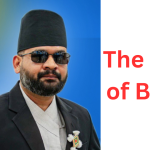
According to an investigation published by The Grayzone, leaked documents allegedly show that prominent members of Nepal’s new political establishment—including Prime Minister Balen Shah, Rastriya Swatantra Party (RSP) chairman Rabi Lamichhane, Home Minister Sudan Gurung and parliamentarian Sagar Dhakal—were identified as emerging political leaders in programs associated with the Consortium for Elections and Political Process Strengthening (CEPPS).
The report alleges that CEPPS was involved in a US government-funded political development initiative in Nepal and links the organization to the National Endowment for Democracy (NED). The claims have added a new dimension to an already heated debate over Nepal’s political transition following the unrest of September 2025.
Disaster response under growing criticism
Public anger has intensified following a catastrophic landslide in the Trishuli River valley, which reportedly killed or left more than 1,000 people missing or dead. Rescue operations have faced serious challenges, while questions have been raised over the government’s handling of international assistance.
Critics have accused the government of responding too slowly and failing to make effective use of foreign expertise and technology. The controversy intensified after Prime Minister Shah reportedly said that no country possessed extensive expertise for dealing with the particular rescue operation and that suitable technology was not immediately available.
Engineers and disaster-response specialists publicly challenged that assessment, arguing that international experience and technology for rescuing people trapped beneath mud and debris are well established.
The response has also generated criticism over the government’s approach to international assistance. According to the report, officials were accused of delaying foreign rescue support, while rescue workers and other stakeholders reportedly pressed the government to permit assistance from countries including China, India and Australia.
The controversy is particularly significant because China had reportedly provided Nepal with advance warnings about enhanced rainfall and the potential for landslides and flash floods shortly before the disaster.
Questions over political conduct
Prime Minister Shah has also faced criticism over the government’s decision to channel donations through an official portal controlled by his office. The government reportedly justified the arrangement as a measure intended to prevent financial irregularities.
Critics, however, have questioned the transparency and independence of the system, particularly as local organizations and government representatives sought greater clarity over the management of donated funds.
Home Minister Sudan Gurung has likewise attracted attention after becoming personally involved in tunnel-rescue activities. Supporters viewed his presence at rescue sites as evidence of direct engagement, while critics argued that the Home Minister should be coordinating the broader national disaster response rather than participating directly in individual rescue operations.
Gurung also faced criticism after reportedly promoting donations to his NGO, Hami Nepal, during the disaster. The social-media post was subsequently removed, according to the report.
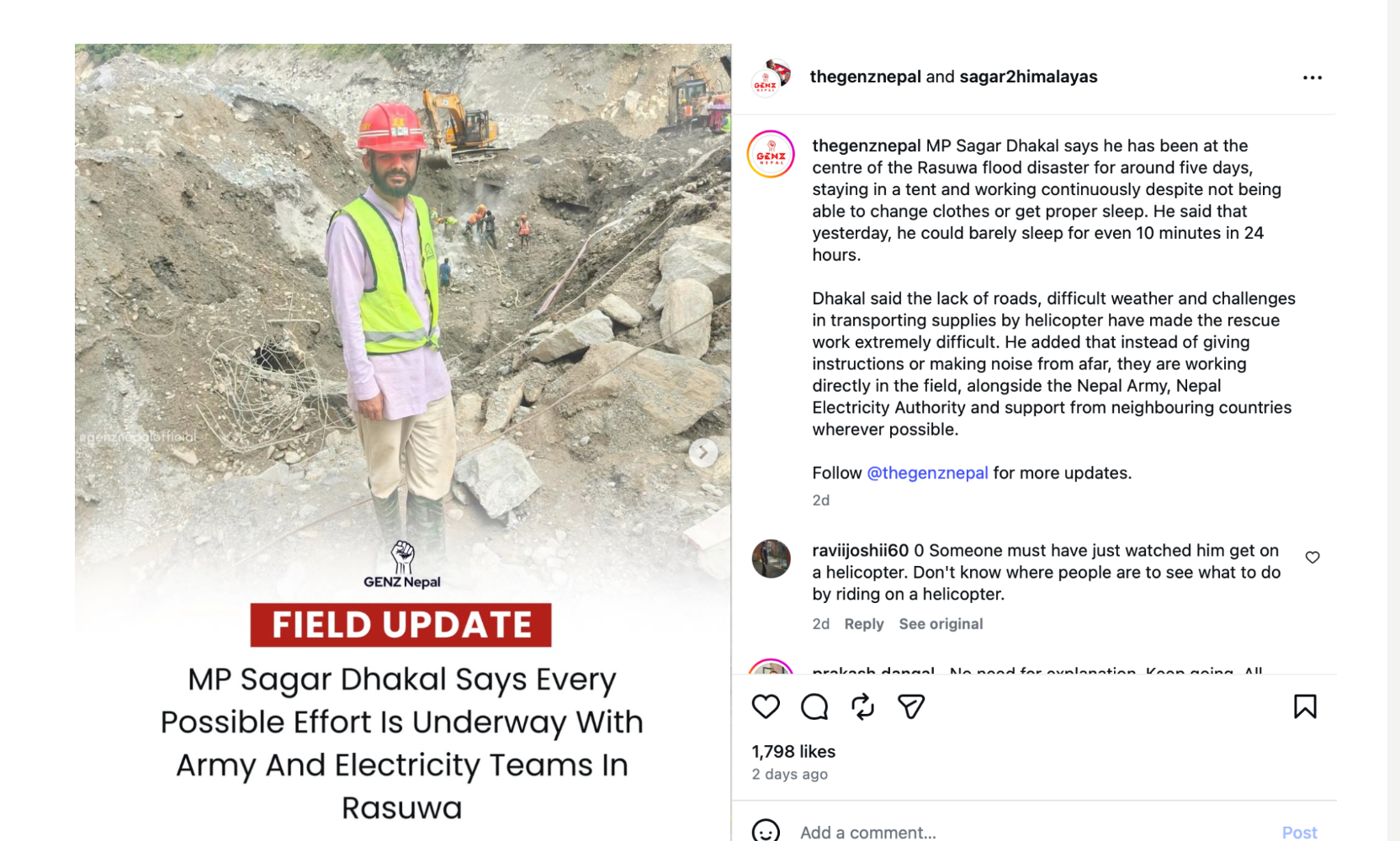
Parliamentarian Sagar Dhakal was similarly criticized over his presence at disaster sites and the publication of photographs from the affected areas. The criticism became so intense that RSP chairman Rabi Lamichhane reportedly urged party members to avoid what he described as “disaster tourism.”
Leaked documents and the NED connection
The most politically explosive element of the new report concerns the alleged links between Nepal’s emerging political leaders and CEPPS.
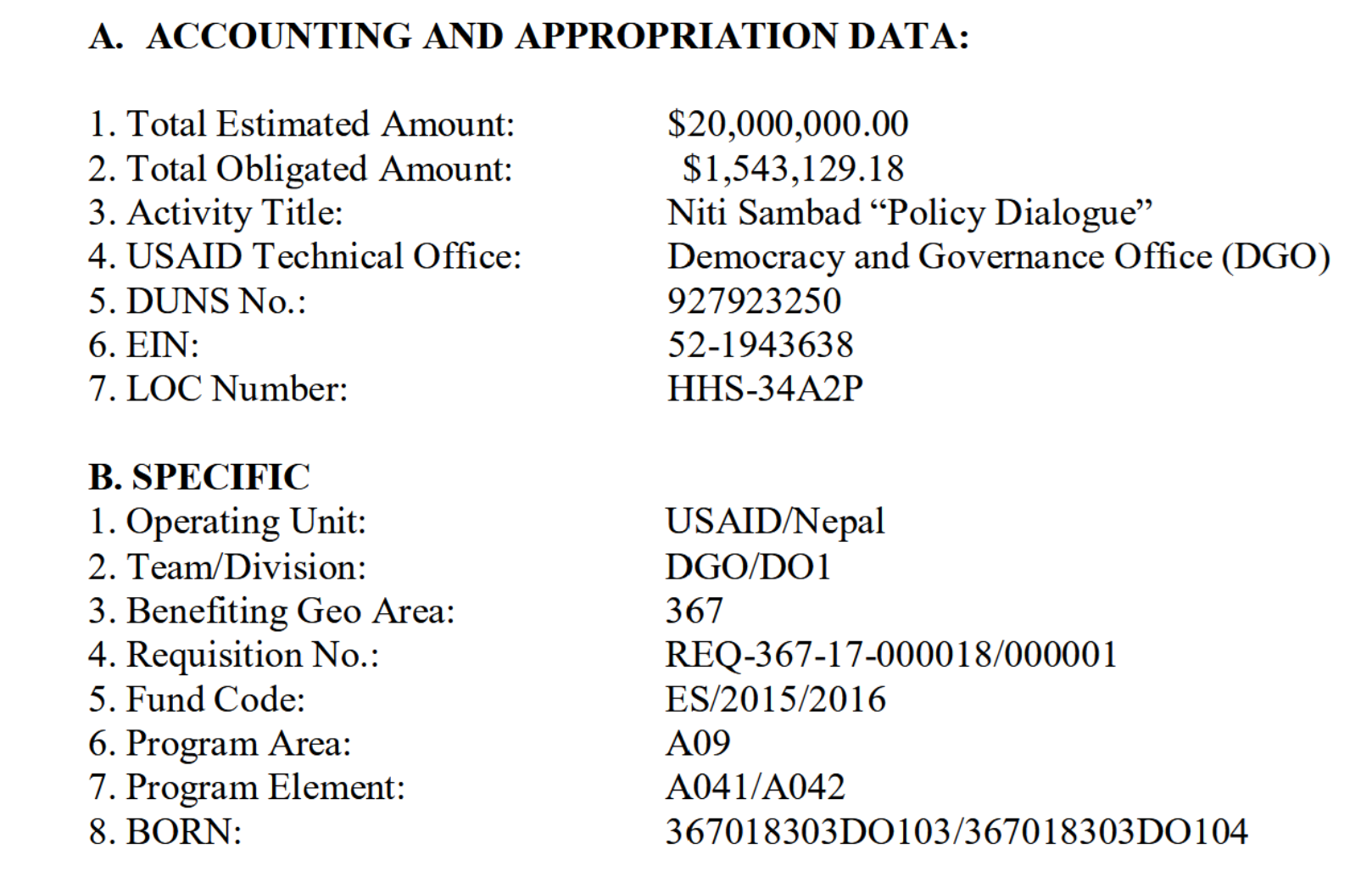
According to documents reviewed by The Grayzone, a US-funded initiative known as “Niti Sambad,” or “Policy Dialogue,” operated in Nepal between 2017 and 2022. The project reportedly involved the International Republican Institute (IRI), International Foundation for Electoral Systems and National Democratic Institute.
The report says the initiative focused heavily on young political leaders, political participation, public communication, social media, leadership development and electoral processes.
Among the individuals identified in the leaked documents as “catalytic civic leaders” were Shah, Lamichhane, Gurung and Dhakal.
The documents allegedly described CEPPS efforts to identify “potential emerging leaders” who could become influential actors within Nepal’s Parliament. Training reportedly included public relations, public speaking, social media and leadership development.
The allegations have prompted renewed debate over the extent to which foreign-funded organizations influence political movements and political leadership in developing democracies.
However, the existence of training or political-development programs does not by itself establish that the individuals involved were controlled by a foreign government or that Nepal’s political transition was directed from abroad. Such conclusions remain allegations requiring independent verification.
Nepal’s turbulent political transition
Nepal underwent a dramatic political transformation in September 2025 after large-scale protests forced Prime Minister K.P. Sharma Oli to resign. The unrest became violent, with government buildings and other infrastructure attacked and set on fire.
The subsequent political transition eventually paved the way for the RSP to emerge as a dominant political force. Shah, previously known as the mayor of Kathmandu and a popular rapper and engineer, joined the political movement and later became prime minister after parliamentary elections in March 2026.
Lamichhane, a former television journalist, founded the RSP in 2022. His political career has also been controversial, including legal and citizenship-related disputes.
The new allegations therefore come at a politically sensitive moment for Nepal. The government is attempting to establish itself as an alternative to the traditional political parties while simultaneously confronting criticism over its handling of one of the country’s worst recent natural disasters.
China, geopolitics and Nepal’s future
The leaked documents also reportedly reveal concerns within CEPPS over China’s growing influence in Nepal.
According to The Grayzone, the documents discussed the alleged negative effects of Chinese infrastructure, hydropower and Belt and Road Initiative investments. The report argues that such political messaging could have contributed to a broader anti-China climate.
The issue has become particularly sensitive following the recent disaster because China has been involved in Nepal’s infrastructure development and disaster-warning cooperation.
Some civil-society figures who previously supported the 2025 political movement have reportedly begun criticizing the government’s disaster response and calling for stronger cooperation with China on early-warning systems.
Nepal now faces a difficult political test. The government must address immediate humanitarian needs while also restoring public confidence in its disaster-management capacity, financial transparency and political independence.
The leaked documents have added further questions about the origins of the country’s new leadership. Whether they ultimately demonstrate genuine foreign political intervention, routine international democracy assistance, or something in between remains a matter for further investigation.
For now, Nepal’s political transformation continues to unfold amid a powerful combination of public anger, humanitarian crisis, geopolitical competition and demands for greater accountability.
Source: The article is based on the report supplied by the user and allegations attributed therein to The Grayzone, with disputed claims presented as allegations rather than established facts.