Indra Jatra: A Living Heritage of Tradition, Culture and Guthi
Kathmandu is not merely a city of temples, palaces, courtyards and ancient monuments. It is a living cultural landscape where history, religion, art and community traditions continue to shape everyday life. Among the many festivals celebrated in the Kathmandu Valley, Indra Jatra stands out as one of the most spectacular and culturally significant festivals. It brings together religious faith, ancient legends, traditional art, music, dance, community participation and the centuries-old Guthi system.
Known locally as Yenya, Indra Jatra is particularly associated with the cultural identity of Kathmandu. The festival is celebrated mainly by the Newar communities of the Kathmandu Valley, but its significance extends far beyond any single community. Hindus and Buddhists participate in various rituals and celebrations, making Indra Jatra a remarkable example of religious coexistence and shared cultural heritage.
Historical Background
The exact origin of Indra Jatra is associated with various historical accounts and legends. It is generally believed that the festival has roots in the ancient cultural traditions of Kathmandu and developed over several centuries. Some historical traditions associate its early development with King Gunakamadeva, who is also linked with the development of Kathmandu city. During the Malla period, however, Indra Jatra became more organized, elaborate and closely connected with royal and community traditions.
Historically, festivals in Kathmandu were not simply religious events. They were also important occasions through which the relationship between the ruler, religious institutions and local communities was expressed. Indra Jatra developed within this social and cultural structure and has survived through generations because of the active participation of local communities and traditional Guthi institutions.
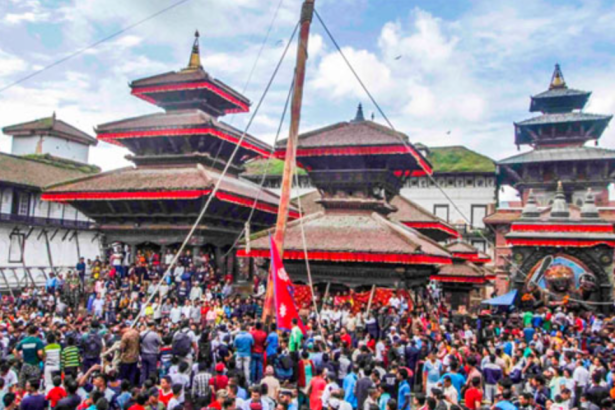
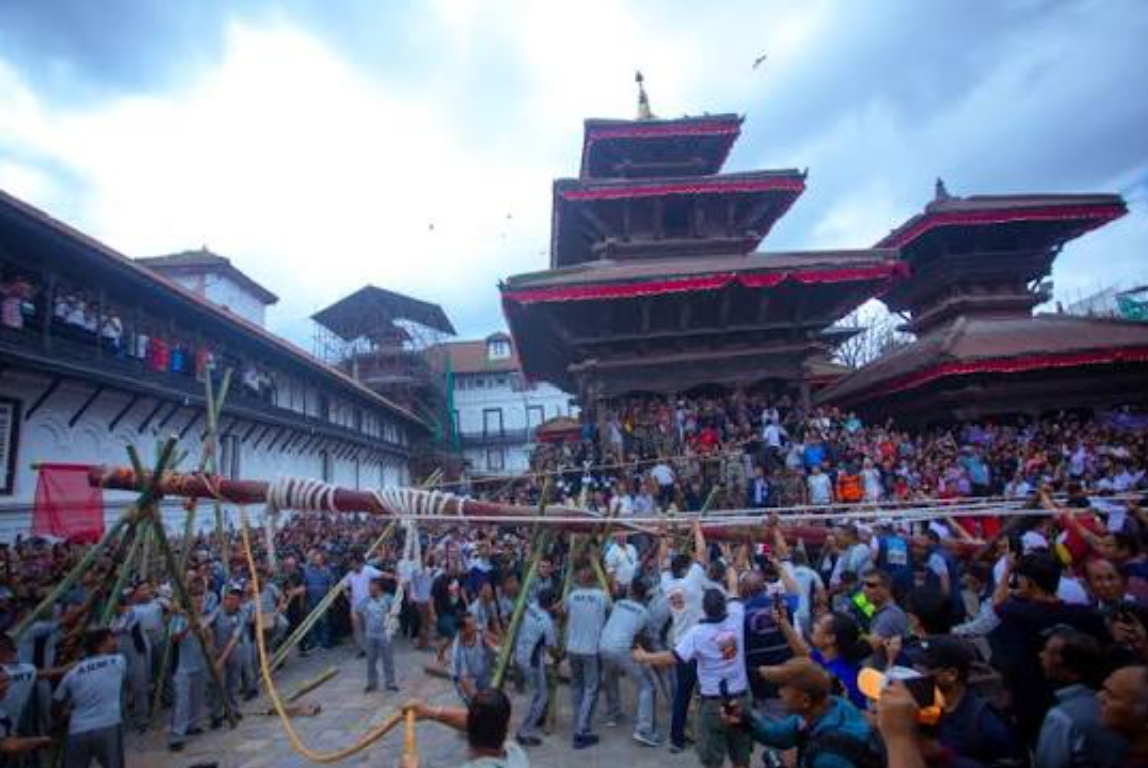
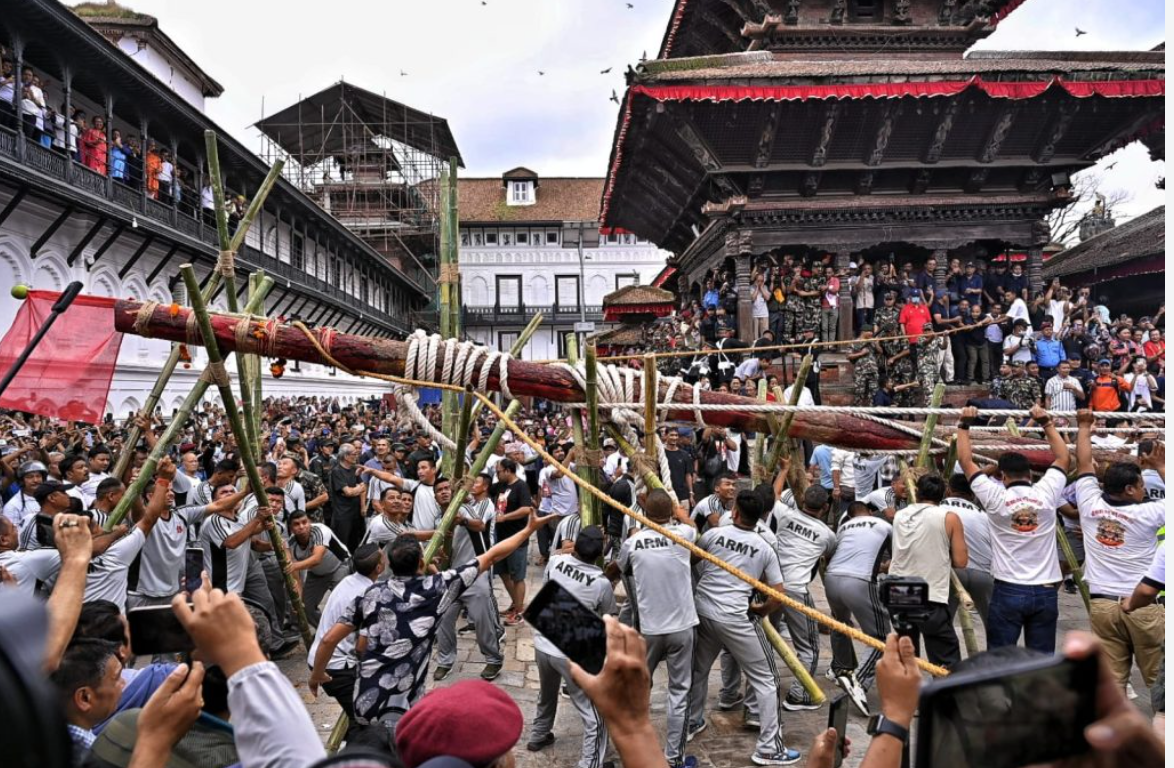
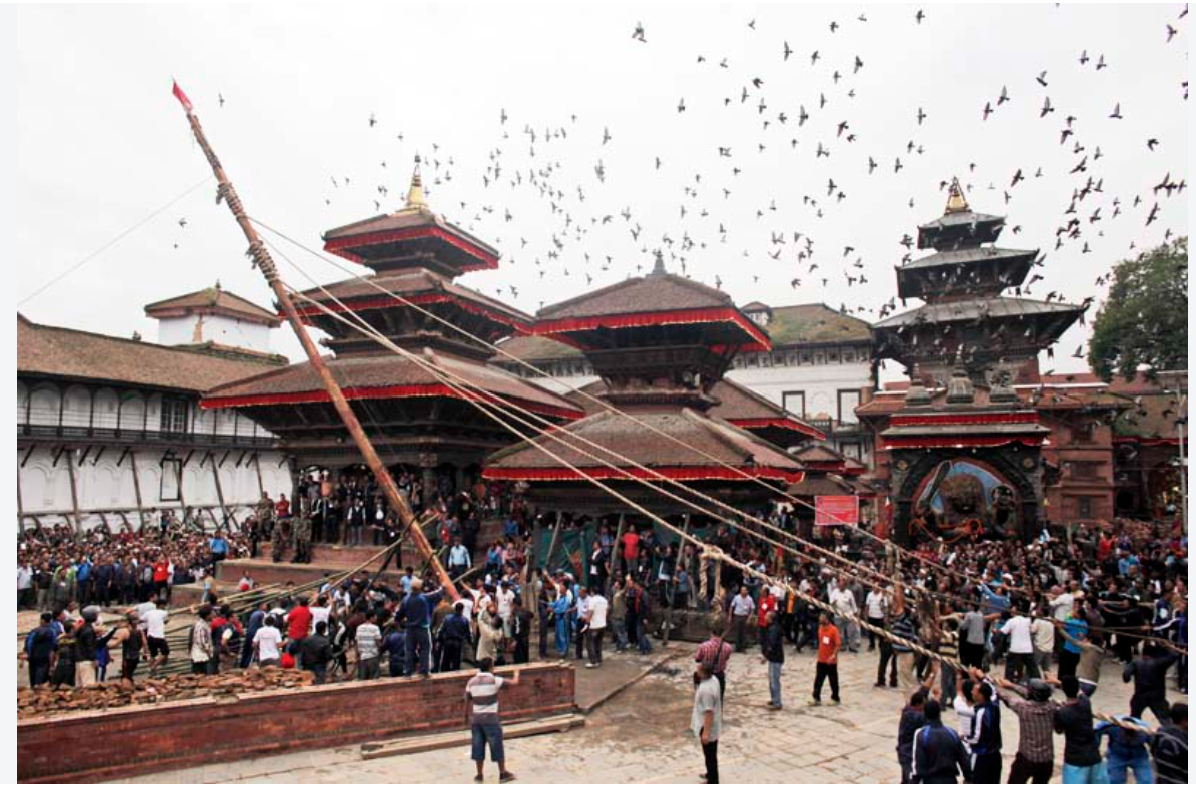
The festival traditionally begins with the ceremonial erection of Yahsing, a wooden pole representing the sacred Indra flag, in front of the Hanuman Dhoka Palace area. The raising of the pole marks the formal beginning of the festival. Various religious rituals, chariot processions, dances and cultural performances continue for several days before the festival concludes with the ceremonial lowering of the pole.
The Legend of Lord Indra
The religious significance of Indra Jatra is closely connected with Lord Indra, the Hindu god traditionally associated with rain, fertility and the heavens. In an agricultural society, rainfall has always been essential for survival, making the worship of Indra deeply meaningful.
According to a popular legend, Indra came to the Kathmandu Valley in search of the Parijata flower for his mother. While collecting the flower, he was caught by local people, who mistook him for a thief. He was captured and tied up.
When Indra did not return, his mother came to Kathmandu searching for him. Eventually, the people discovered his true identity and released him. According to the legend, Indra’s mother blessed the people of the Valley with rain and prosperity and promised to help the souls of the deceased.
This story gives Indra Jatra a deeper meaning. It is not merely a festival dedicated to a deity. It reflects the relationship between nature, rainfall, agriculture, human life and spiritual belief.
The Kumari Chariot Procession
One of the most important and visually impressive features of Indra Jatra is the chariot procession of Kumari, the Living Goddess of Kathmandu.
Kumari is traditionally regarded as the living manifestation of the goddess Taleju. During Indra Jatra, Kumari is placed on a specially constructed wooden chariot and taken through the historic streets of Kathmandu. Chariots carrying Kumari, Ganesh and Bhairav form the centrepiece of the festival.
The procession passes through historic neighbourhoods such as Ason, Indra Chowk, Makhhan and Maru. Thousands of devotees and spectators gather along the streets, rooftops and courtyards to receive the blessing and glimpse of the Living Goddess.
The tradition of the Kumari chariot procession is particularly associated with the reign of King Jaya Prakash Malla during the Malla period. Over time, it became one of the most distinctive cultural traditions of Kathmandu.
The procession represents more than a religious ceremony. It connects the living cultural traditions of Kathmandu with its royal history, traditional urban settlements and community institutions.
Bhairav, Lakhey and Pulukisi
Indra Jatra is much more than the Kumari procession. The festival transforms the historic centre of Kathmandu into a vibrant cultural stage.
The dramatic appearance of Shwet Bhairav, the worship of Akash Bhairav, the traditional Lakhey dance, Pulukisi and various masked dances are among the major attractions of the festival.
Lakhey, a traditional masked figure, is one of the most recognizable elements of Kathmandu’s cultural heritage. Accompanied by traditional musical instruments and performers in colourful costumes, the dance creates a unique atmosphere throughout the festival.
These performances should not be viewed merely as entertainment. They contain religious symbolism, local legends, historical memories and community traditions that have been transmitted from one generation to another.
During Indra Jatra, historic squares, temples, bahals, courtyards and neighbourhoods are decorated and illuminated. Traditional music fills the streets, while religious rituals and cultural performances continue throughout the festival period. Kathmandu itself becomes a vast open-air cultural theatre.
The Role of the Guthi System
Perhaps the most important institution behind the continuity of Indra Jatra is the traditional Guthi system.
Guthi is a distinctive social and cultural institution of Nepal, particularly important in the traditional Newar society of the Kathmandu Valley. It has historically played roles in religious activities, social organization, cultural preservation, land management and community welfare.
In Indra Jatra, different Guthis and community organizations have traditionally been responsible for various aspects of the festival. Their responsibilities may include the construction and maintenance of chariots, religious rituals, preparation of ceremonial materials, musical performances, traditional dances and other organizational activities.
The Guthi system also plays a crucial role in preserving traditional knowledge and skills. The craftsmanship involved in constructing wooden chariots, producing masks and religious objects, playing traditional musical instruments and performing ritual dances cannot be preserved only through written documents. These skills survive through practice and transmission from one generation to another.
In this sense, Guthi is not simply an organizational mechanism for conducting a festival. It is one of the principal institutions responsible for keeping the cultural memory of Kathmandu alive.
Social Unity and Cultural Coexistence
Another important feature of Indra Jatra is its ability to bring different communities together. Various social groups, Guthis, artists, musicians, religious practitioners and ordinary residents participate in the festival.
The coexistence of Hindu and Buddhist traditions is particularly significant. Different religious communities participate in and respect the rituals associated with the festival, demonstrating Kathmandu’s long tradition of cultural pluralism.
Indra Jatra therefore represents more than religious devotion. It is also a celebration of community identity, social cooperation, mutual respect and cultural coexistence.
Cultural Tourism and the Modern City
Indra Jatra also has considerable potential for cultural tourism. The historic streets of Kathmandu, Hanuman Dhoka, temples, traditional courtyards, chariots, masked dances, music and religious ceremonies attract both domestic and international visitors.
However, tourism should support rather than weaken the cultural character of the festival. Excessive commercialization can gradually turn a living cultural tradition into a mere spectacle. The religious significance and community ownership of Indra Jatra must therefore remain at its core.
Challenges of Heritage Preservation
Despite its vitality, Indra Jatra faces several challenges in the modern era. Rapid urbanization, changing lifestyles, declining interest among younger generations in traditional skills and the gradual disappearance of traditional knowledge can threaten the continuity of cultural practices.
Preservation should therefore go beyond organizing the festival once a year. There is a need for systematic documentation of its history, rituals, Guthi structures, traditional music, dances, chariot construction techniques and oral traditions.
Government institutions, local governments, cultural organizations, researchers and, most importantly, local communities and Guthis need to work together to ensure that the festival remains authentic and sustainable.
Indra Jatra 2026 Festival Schedule
- September 16, 2026 (Bhadra 31): Entry of the ceremonial wooden pole into the city (Yosin Dutthyagu)
- September 23, 2026 (Ashoj 7 – Wednesday): Raising of the Indra Dhwoj pole at Hanuman Dhoka (Indradhwojothan – Official start of the festival)
- September 25, 2026 (Ashoj 9 – Friday): The Main Day of Indra Jatra featuring the Chariot Festival in the southern part of the city (Kwaneya – Public Holiday in Kathmandu Valley)
- September 26, 2026 (Ashoj 10 – Saturday): Chariot Festival in the northern part of the city (Thaneya)
- September 30, 2026 (Ashoj 14 – Wednesday): Chariot Festival through the central core (Nanichaya, traditionally pulled by women)
- September 30, 2026 (Ashoj 14 – Wednesday night): Lowering of the ceremonial pole (Indradhwoj Patan – Official conclusion of the festival)
Conclusion
Indra Jatra is far more than an annual festival. It is a living historical document of Kathmandu. It contains ancient religious beliefs, stories of Lord Indra, the spiritual presence of Kumari, the power of Bhairav, the energy of Lakhey dances, traditional music and the collective participation of communities.
Most importantly, its survival demonstrates the strength of the Guthi system and community-based cultural preservation.
To protect Indra Jatra is therefore not simply to preserve a festival. It is to protect Kathmandu’s history, traditional architecture, music, dance, religious practices, craftsmanship, Guthi institutions and communal way of life.
As Nepal moves rapidly into modernity, the challenge is not to freeze Indra Jatra in the past but to ensure that its living traditions continue to evolve without losing their authenticity. If the younger generation is connected with its history and communities retain meaningful ownership of the tradition, Indra Jatra can continue to flourish as one of Nepal’s most remarkable expressions of living cultural heritage for generations to come.